
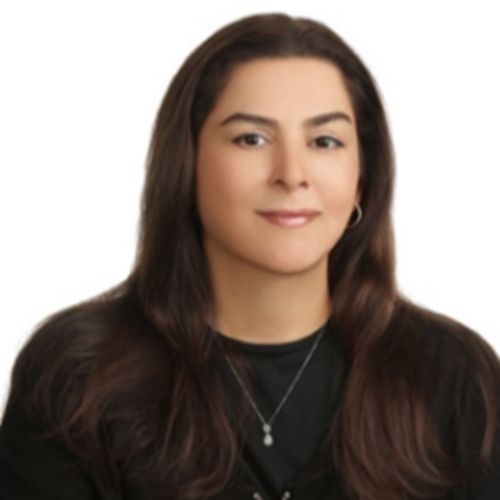
Dr. Kamile Hamiloğlu
Bio:
Dr. Kamile Hamiloğlu, PhD (Boğaziçi University); EdD (University of Leicester)
Dr. Hamiloğlu has worked in the field of Applied Linguistics and English Language Teaching (ELT/EFL) since 1986. She holds a BA in English Language Teaching from Dokuz Eylul University in İzmir and an MA in Communication Studies at İstanbul University in Istanbul, an MA in Educational Sciences (combined with doctoral) from Boğaziçi University in Istanbul, Turkiye. She has a PhD in Educational Sciences from Boğaziçi University in İstanbul, Türkiye, and an EdD (Doctoral in Education) in Applied Linguistics and TESOL from the University of Leicester in Leicester, England. She also holds a Teacher Trainer’s Certificate in Critical Thinking from the University of Oregon, USA. Since 2016, she has participated in certification programmes and conferences in Neuro-language Coaching at LCC, London, UK. She has taught a wide range of English Language Teaching (ELT) courses, for BA, MA and PhD programmes at undergraduate and postgraduate levels at Marmara University, Boğaziçi University, and Bahçeşehir University in İstanbul, Turkiye, and at the University of City Island in the Turkish Republic of Northern Cyprus, since 1998. She is currently a lecturer in the Department of Applied Linguistics and English Language Teaching at Marmara University in Istanbul, since 1998-1999 academic year, where has also served as department chair during several periods of time. She also continues to act as the department’s Practicum and Curriculum Coordinator.
At the start of her career, she worked in private schools, as an English teacher and as Head of the Department from 1986 to 1994. Then she joined Oxford University Press (OUP) as a senior educational consultant, editor, and teacher-trainer. After five years of full-time service at OUP, she continued to collaborate with the organisation on part-time basis for a further four years, (during which time she also began her academic career as a lecturer at Boğaziçi and Marmara University). She also collaborated part-time with Cambridge University Press, as a teacher-trainer. Currently she works with OUP on a freelance basis delivering teacher- training seminars for English teachers.
She has provided consultancy and authored curricula of various well-known private schools or school chains in Istanbul and she has also served as an official academic advisor on curriculum development at the Preparatory Department of Marmara University for a certain period of time.
Since December 2023, she has been serving as the Lead Curriculum Developer and Author of the English National Curriculum and since January 2025, she has been the Editor-in-Chief of the team of authors for K12 English coursebooks in Turkiye. She has been presenting her research at numerous national and international conferences and has been delivering academic lectures as an invited speaker both in Türkiye and abroad since 1994. She published with local and international publishers, and is the author, co-author and editor of several ELT materials. Her academic research interests include professional identity,
professional development, practicum, course and lesson planning, curriculum evaluation and design, material and coursebook evaluation and design, culture, critical thinking, critical reflection, critical pedagogy, and transformative learning in Foreign/Second Language Teacher Education (F/SLTE) and in English as a foreign/second language (EF/SL).
Session Synopsis:
Neuro-language Coaching for the Whole Learner: Integrating Mind, Body, and Heart for Holistic Communication through Individualised Learning
Effective, healthy, and versatile communication should be the central goal of foreign language education. Achieving such communication requires more than linguistic accuracy, performance-based assessment or instructional differentiation; it requires a mindset that recognises the learner as a whole person. This session proposes Neurolanguage Coaching as a holistic, neuro-informed approach that integrates mind, body, and heart within individualised learning to support sustainable communicative development.
Rather than framing individualisation as the instructional differentiation and adaptation of materials or techniques alone, this approach redefines it as a collaborative, neuro-informed, and growth-oriented partnership between educator and learner. From the outset, Neurolanguage Coaching establishes a dialogic learning process in which metacognitive awareness and strategic autonomy develop alongside reduced threat responses, strengthened confidence, and psychological safety. Together, these dimensions cultivate holistic communication, communication that is not only linguistically competent but emotionally sustainable, identity- aware, and adaptable across contexts.
Moving beyond purely cognitive models of language acquisition, the “whole learner” is conceptualised as a dynamic interplay of cognitive engagement (mind), emotional well-being and identity formation (heart), and embodied regulation (body). Grounded in neuroscience- informed coaching principles, Self-Determination Theory, constructivist pedagogy, and research on language anxiety, the approach positions communication as both cognitively constructed and physiologically and emotionally regulated.
Through practical illustrations and pedagogical implications, the session demonstrates how Neurolanguage Coaching shifts language practice from correction-driven performance to reflective growth conversations. By embedding the integration of mind, body, and heart as both principle and mindset, foreign language learning can foster communicative competence alongside resilience, agency, and long-term well-being.