
Amanda Croft
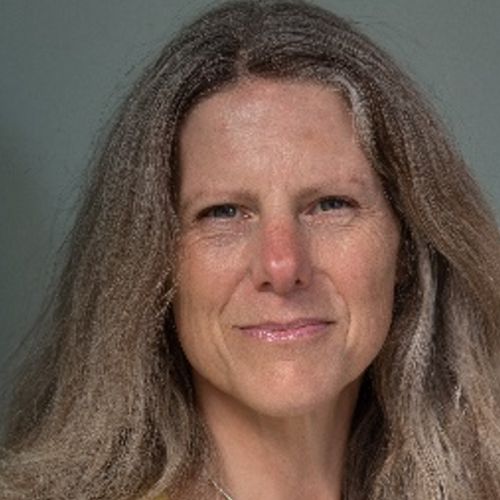
Bio:
Amanda Croft founded English with STILE to bridge the gap between formal CELTA training and the realities of classroom teaching and coaching. Her mission is to empower language professionals to integrate storytelling, theatre skills, and improvisation into their teaching, creating dynamic learning experiences both online and in person.
With three decades of experience blending acting and EFL teaching, Amanda holds an MA in TESOL, specialising in gesture and language acquisition. Her interactive STILE workshops have been featured at international conferences including IATEFL, ELTABB in Berlin, TESOL Spain-North, BESIG Athens, and the Neurolanguage Coaching®️ Conference in Sitges 2024, where the seeds for her company were first sown.
Amanda’s work on storytelling was recently showcased in TUG (The University Grapevine), curated by Robert Stoud. This year, she returns to Sitges to present “Listening: the heart of improvisation”, an immersive workshop exploring the art of listening with our wholeselves—a testament to her commitment to active, embodied learning.
Session synopsis:
Listening is at the heart of Improvisation.
There are two key elements at the heart of active listening: one is attention and the other is presence. In this workshop especially created for Sitges 2026, we will explore through whole group exercises the attention required to listen not just with your ears, but with your whole being.
The content will involve whole group exercises which will promote listening with your senses and your entire being. Improvisation teaches us to observe carefully, provide support for the others in the group and listen with attention and presence both to ourselves and others. The aim is that the audience will participate in an experience which will highlight the above key features, but also take away ideas that they can use in their physical learning spaces. It will be a workshop format, ideally an hour or 1hr 15 depending on time constraints.
Engagement plan: 1. Warm up exercises 2. Moving to a whole group exercise 3. Then 3 large groups, each with one leader who will change spontaneously and without any kind of discussion 4. These 3 large groups will then divide into 6 groups, but will work together observing physical characteristics. From these physical characteristics short 2 player improvised scenes will arise which are then supported by the rest of the group. The scene will be given a title/ general context by the group. 5. The final exercise, in small groups, involves preparing a short scene in which a sentence is hidden (not strictly improvisation) . A couple of these can be performed for the whole group. The aim for the watching audience is to uncover the ‘hidden sentence’. It’s listening all the way!